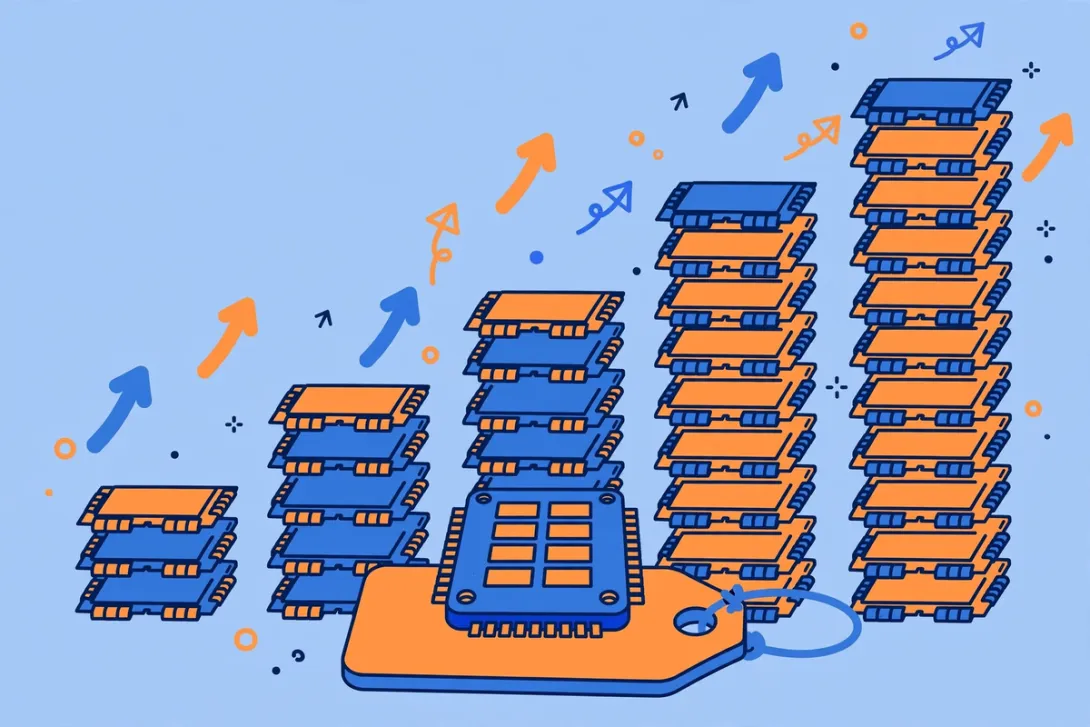
Intel raised prices on its PC processors by roughly 10 percent effective October 5, 2026, according to supply-chain reporting from DIGITIMES — the company's third processor price increase since late 2025. The move follows a roughly 10 percent hike in the first quarter of 2026 and a July round that lifted select consumer and server chips by amounts ranging from tens of dollars on everyday laptops to more than 1,000 dollars on some server parts.
The culprit is memory. DRAM and NAND prices have been climbing for months as AI data centers absorb available capacity, and that cost is now landing on the PCs and servers enterprises and consumers buy. Speaking at Splunk's .conf26 Global Broadcast, Intel CEO Lip-Bu Tan put the squeeze in stark terms: memory prices are up five to seven times, and Intel currently cannot fill more than half of the orders coming in for its own processors. That is not a company chasing volume; it is a company rationing supply.
Wall Street has rewarded the stance. Intel's shares climbed on the hike reports in early September and ran up again in early October, leaving the stock up roughly 236 percent so far in 2026 — by some measures its best calendar year in more than four decades. The strategy under Tan is explicit: prioritize gross margin growth over aggressive market share expansion. The same playbook is driving a reported review of Intel's lower-margin Small Core product line, which could push budget-focused embedded and industrial chips toward end-of-life.
This is not an Intel-only story. AMD reportedly issued partner notices of roughly 10 percent increases on Instinct, Radeon, and chipset products effective in the fourth quarter, and Qualcomm raised its chip prices on September 1. The pattern defines PC hardware pricing in 2026: AI data centers are systematically consuming the memory that goes into laptops and desktops, and cost pass-through has become industry-wide. Some analyses estimate the three Intel rounds now total roughly 30 percent cumulative list-price increases in a single year.
For IT procurement, the implication is timing. PC refresh budgets set in early 2026 assumptions are already stale, and server CPUs face the same pressure. With memory demand from AI expected to stay tight, buyers should not assume prices will drift back to 2025 levels — most forecasts push any normalization to 2028 at the earliest. Locking pricing early, refreshing in waves rather than all at once, and watching DDR5 spot prices as a leading indicator are the practical responses to a market where the constraint is upstream of the chip itself.